
How To Build A Mortgage Plan Before You Start House Hunting
Most first-time buyers jump into house hunting without a clear mortgage plan and end up frustrated or over budget. You deserve a smarter approach that starts with understanding your budget, credit, and loan options. The Gen-First Mortgage Method offers a step-by-step path to get pre-approved with confidence and clarity, so you can shop for your Florida home without surprises. Let’s break down the plan that puts your goals first.
Build Your Mortgage Plan

Creating a solid mortgage plan is your first step to confident home shopping. It’s all about knowing your budget and understanding the costs.
Understanding Your Mortgage Budget
Knowing your mortgage budget is crucial. You want to be sure about what you can afford. Start by looking at your income and monthly expenses. Get a clear picture of your financial health. Write down your monthly income and subtract your regular expenses. This will give you an idea of how much you can dedicate to a mortgage payment without stress. Remember: your mortgage payment isn’t just the loan amount. It also includes taxes, insurance, and maybe HOA fees. Make sure to include these when calculating your total housing cost.
Using a Mortgage Budget Calculator
A mortgage budget calculator is a handy tool. It helps you figure out how much home you can afford. Enter your income, debts, and expected down payment. The calculator will estimate your monthly payment. This gives you a realistic view of your buying power. Try adjusting the numbers to see different scenarios. It’s a good way to understand how changes in interest rates or down payments affect your budget. Using a calculator early can save you from house-hunting heartbreak later.
Aligning Payment Comfort and Costs
Aligning your payment comfort with actual costs is key. Don’t stretch your budget too thin. Think about your lifestyle and future plans. Do you want to travel, save for retirement, or have kids soon? These plans affect how much you should spend on housing. A comfortable mortgage payment lets you live your life without financial stress. It’s not just about getting approved for the highest amount. It’s about choosing what’s financially smart for you.
Steps to Pre-Approval

Once your budget is set, the next step is pre-approval. This process shows sellers you’re serious and can afford the home.
Pre-Approval Checklist Essentials
Getting pre-approved requires some paperwork. Here’s what you need: proof of income, tax returns, and bank statements. These documents show your financial stability. Lenders want to see that you can reliably make payments. Another key document is your employment verification. It proves you have a steady job. Gathering these documents in advance can speed up the process. Most people think pre-approval is lengthy, but with the right prep, it’s quite straightforward.
Credit Score for Mortgage Success
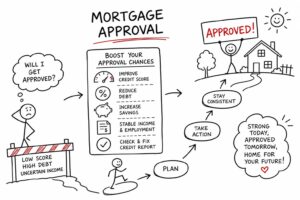
Your credit score plays a big role in mortgage success. A higher score often means better loan terms. Check your score before applying. If it’s low, work on improving it. Pay off debts, avoid new credit inquiries, and correct any errors on your report. Lenders use your score to judge risk. A good score shows you’re responsible with credit. This can lead to lower interest rates, saving you thousands over the life of the loan.
Debt-to-Income Ratio Insights
Your debt-to-income ratio (DTI) is another critical factor. Lenders use it to assess your financial health. It compares your monthly debt payments to your income. A lower DTI is better. Aim for 36% or less for a comfortable approval. Calculate your DTI by adding up all monthly debts, then dividing by your gross monthly income. Keep this ratio in mind as you manage your finances. Most people overlook DTI, but it’s vital for mortgage approval.
Navigating Mortgage Options

With pre-approval ready, explore mortgage options. Different loans suit different situations.
Conventional vs FHA Loans
Choosing between conventional and FHA loans can be tricky. Conventional loans often require a higher credit score but have more flexible terms. On the other hand, FHA loans are more accessible, with lower credit score requirements. They also offer lower down payments. Consider your financial situation and future plans. If your credit is solid, a conventional loan might save money in the long run. If you need flexibility, FHA could be a better fit. Compare both to see which aligns with your goals.
Exploring Down Payment Assistance in Florida
Down payment assistance programs in Florida can ease the buying process. These programs help cover down payment costs, making homeownership more accessible. Research local options to see what you qualify for. Some programs cater to first-generation homebuyers, offering grants or loans with favorable terms. Take advantage of these resources. They can reduce upfront costs, allowing more focus on finding the right home. Most people don’t know these programs exist, but exploring them can make a big difference.
Closing Costs Explained for New Buyers
Closing costs are often a surprise for new buyers. They include fees for processing, inspections, and title insurance. Expect them to be 2-5% of the purchase price. It’s crucial to budget for these costs early on. Review a breakdown of closing costs with your lender. Understanding these fees helps avoid last-minute surprises. Remember: closing costs are part of the total expense of buying a home. Knowing this helps keep your financial plan on track.