HELOC rates in Florida don’t stay the same for long, and knowing what moves them can save you thousands. Your credit score, the CLTV, and how lenders calculate margins all play a role in the rate you get. In this post, you’ll learn how a home equity line of credit works, what to watch for with variable rate HELOCs, and how to create a plan that fits your goals. Let’s clear the confusion so you can make choices with confidence.
For those considering Real Estate Bridge Loans, understanding the dynamics of HELOC rates can be equally beneficial.
Understanding HELOC Rates
To make informed decisions about your home equity line of credit, you need to understand the basics first. This section will cover what you need to know about HELOCs in Florida, including variable rates and prime rates.
Basics of HELOC Florida
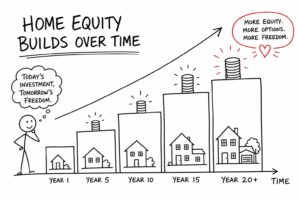
A home equity line of credit allows you to borrow against the equity in your home. In Florida, this can be a strategic way to access funds for renovations, debt consolidation, or other investments. The amount you can borrow depends on your home’s value and your remaining mortgage balance. Most people know they need a good credit score, but did you know your home’s location in Florida also matters? Local market conditions can influence your HELOC terms, making it crucial to stay informed about Florida real estate trends.
Variable Rate HELOC Explained
Variable rate HELOCs have interest rates that can change over time. They typically start with a lower introductory rate, which might seem appealing. However, these rates can increase, impacting your monthly payments. Imagine your interest rate jumping from 4% to 6%—that’s a significant difference. You can manage this risk by keeping track of economic indicators and adjusting your budget accordingly. Always have a backup plan for rising costs to avoid surprises.
Role of Prime Rate HELOC
The prime rate plays a critical role in determining your HELOC rate. It’s the rate banks charge their most creditworthy customers, and it influences other rates, including HELOCs. When the prime rate goes up, your HELOC rate could follow. This means your borrowing costs can increase if the prime rate rises. Staying updated on Federal Reserve announcements can help you anticipate changes in the prime rate, allowing you to adjust your financial plans.
Factors Affecting HELOC Rates

Understanding what influences your HELOC rate can help you secure better terms. This section will explore the key factors, including the HELOC index, margin, credit score, and CLTV.
HELOC Index and HELOC Margin
Your HELOC rate comprises two parts: the index and the margin. The index is a variable rate that can change, while the margin is a fixed percentage added by the lender. For example, if the index is 3% and your margin is 2%, your total rate would be 5%. Knowing these components helps you understand what you’re paying for. Compare different lenders to find a margin that suits your financial situation.
Impact of Credit Score on Rates
A higher credit score can lead to lower HELOC rates. It’s not just about getting approved; it’s about securing the best terms. Lenders see a high credit score as a sign of reliability, which can result in lower interest rates. If your score is less than stellar, consider boosting it before applying. Paying off debts and keeping credit utilization low can make a significant difference. Remember, even a small improvement can lead to big savings over time.
CLTV: What It Means for You
CLTV, or Combined Loan-to-Value ratio, measures how much you owe on your home compared to its value. A lower CLTV can improve your HELOC terms. For example, if your home is worth $300,000 and your mortgage balance is $150,000, your CLTV is 50%. Lenders prefer lower CLTVs because they indicate less risk. Keeping your CLTV low by paying down your mortgage and avoiding additional debt can enhance your borrowing potential and lower your rates.
Strategies for Lower HELOC Rates

To secure a better HELOC rate, you’ll need smart strategies. Explore options like comparing with cash-out refinancing, timing your application, and using calculators to your advantage.
HELOC vs Cash Out Refinance
Choosing between a HELOC and a cash-out refinance depends on your financial goals. A cash-out refinance replaces your existing mortgage with a new larger one, giving you cash in hand. While HELOCs let you tap into your equity without altering your primary mortgage, cash-out refinancing may offer better rates. Consider your needs: if you want flexibility and smaller amounts, a HELOC might be preferable. For larger, one-time expenses, cash-out refinancing could be more cost-effective.
Best Time to Get a HELOC
Timing can be everything when applying for a HELOC. Interest rates fluctuate based on economic conditions. Applying when rates are low can save you money. Keep an eye on Federal Reserve announcements and economic indicators. If rates are falling, it might be wise to wait a bit. Conversely, if they’re rising, locking in a rate sooner could be beneficial. Planning around these trends increases your chances of securing favorable terms.
Using a HELOC Payment Calculator
A HELOC payment calculator is a valuable tool for planning your finances. It helps you estimate monthly payments based on different interest rates and borrowed amounts. By inputting your loan amount, interest rate, and repayment period, you get a clear picture of what to expect. This insight can guide your decision-making, helping you determine how much you can afford to borrow and repay comfortably. It’s about making informed choices that align with your financial reality.
Frequently Asked Questions
What is a HELOC and how does it work?
A HELOC, or home equity line of credit, lets you borrow against your home’s equity. It works like a credit card: you have a credit limit and can borrow as needed. You pay interest only on the amount you use.
How is the interest rate on a HELOC determined?
HELOC rates are based on an index and a margin. The index changes with market conditions, while the margin is set by the lender. Your credit score and home’s value can affect these terms.
Can I get a HELOC with a low credit score?
It’s possible, but a low credit score may lead to higher interest rates. Improving your score before applying can result in better terms and save you money in the long run.
What’s the difference between a fixed-rate and a variable-rate HELOC?
A fixed-rate HELOC has a stable interest rate, providing predictable payments. A variable-rate HELOC can change over time, potentially leading to higher or lower payments depending on market conditions.
How can I use a HELOC payment calculator effectively?
Input different loan amounts, interest rates, and repayment periods to see how they affect your monthly payments. This helps you plan your finances and decide how much you can afford to borrow and repay comfortably.