
Qualifying for a mortgage with nontraditional income feels like solving a puzzle without the picture. You juggle fluctuating earnings, 1099s, and bank statements, while lenders stick to old rules that don’t fit your reality. This guide clears the fog so you know exactly how lenders see your income and how to prepare confidently using the Gen-First Mortgage Method to build a plan tailored just for you.
Understanding Nontraditional Income
When it comes to nontraditional income, understanding how lenders evaluate your earnings is crucial. This section will break down key terms and concepts you need to know.
Key Mortgage Terms Explained
Let’s start with the basics. Nontraditional income might include freelance work, contract jobs, or side gigs. Lenders will want to see that your income is stable and can cover mortgage payments. Terms like 1099 income and bank statement loans might sound complex, but they’re simply ways to verify your earnings without standard pay stubs. You’ll need to gather documents like your profit and loss statements to show consistent earnings. Remember, it’s not just about how much you earn, but how regularly you earn it.
Evaluating Income as an Entrepreneur
As an entrepreneur, your income might vary month to month. Lenders look for patterns in your earnings over time. They often require two years of tax returns and may average your income over this period to estimate your qualifying amount. Financial statements, like a profit and loss document, become your best friend here. They show your business’s profitability and stability. If your business is new, showcasing a strong growth trajectory can bolster your application.
The Role of a CPA Letter
A CPA letter can be a powerful tool in your mortgage application. This letter, written by your certified public accountant, confirms your income and financial health. It reassures lenders that your income is consistent and reliable. Ensure it includes details about your business, income stability, and any relevant tax information. This letter acts as a professional endorsement for your financial credibility, easing lender concerns.
Preparing for Mortgage Approval

With your income information in place, it’s time to prepare for mortgage approval. This section focuses on setting the stage for a successful application.
Organizing Financial Documents
Gathering your financial documents is the first critical step. You’ll need tax returns, bank statements, and possibly a CPA letter. Organize these meticulously to paint a clear picture for lenders. Show regular income deposits and minimal large, unexplained transactions. Keeping your paperwork neat and comprehensive demonstrates responsibility and reliability.
Building a Strong Credit Profile
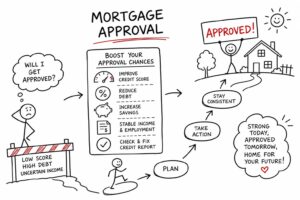
Your credit score plays a significant role in mortgage approval. Check your report for errors and address them promptly. Aim to reduce outstanding debt and pay bills on time to boost your score. Lenders prefer a debt-to-income ratio below 43%, so managing your debts efficiently can improve your chances. A strong credit profile not only increases approval odds but can also secure better interest rates.
Managing Debt-to-Income Ratio
The debt-to-income ratio is a crucial metric for lenders. It compares your monthly debt payments to your income. Keeping this ratio low signals financial health. If you have high debts, consider paying down balances before applying. This not only improves your ratio but also strengthens your mortgage application. Remember, a lower ratio means more borrowing power and better loan terms.
The Gen-First Mortgage Method

Now, let’s explore how the Gen-First Mortgage Method can guide you through the mortgage maze with confidence and clarity.
Custom Approval Game Plan
The Gen-First Mortgage Method starts with a personalized plan. It assesses your unique financial situation and creates a roadmap to mortgage approval. This strategy includes financial assessments, document preparation, and credit optimization. With this tailored approach, you’re not just applying; you’re applying smartly with a clear path to success.
Exploring Loan Options in Florida
Florida offers diverse loan options for entrepreneurs. From bank statement loans to DSCR loans, understanding these can open doors to the right mortgage. The Gen First Method helps you navigate these options, ensuring you find a loan that fits your income style and financial goals. Whether you’re eyeing an investment property loan or a primary residence, Florida’s market has something for you.
The Power of a Personalized Approach
A personalized approach is powerful. It considers your unique income, credit, and property goals. By tailoring the mortgage process to your needs, the Gen First Method increases your chances of approval and satisfaction. It turns a daunting process into a manageable journey, empowering you to achieve homeownership with confidence.
Frequently Asked Questions
What documents do I need to apply for a mortgage with nontraditional income?
You’ll need tax returns, bank statements, and possibly a CPA letter to verify your income. Organize these to show consistent earnings and financial stability.
How does a CPA letter help in the mortgage process?
A CPA letter confirms your income and financial health, reassuring lenders of your reliability. It should detail your business, income stability, and relevant tax information.
What is a debt-to-income ratio and why does it matter?
The debt-to-income ratio compares your monthly debt payments to your income. Lenders use this to assess your financial health and borrowing power.
Can I get a mortgage in Florida with a bank statement loan?
Yes, Florida offers bank statement loans, ideal for those with nontraditional income. These loans use bank statements to verify income instead of traditional pay stubs.
How can the Gen-First Mortgage Method help me?
The Gen-First Mortgage Method provides a personalized roadmap to mortgage approval, considering your unique income, credit, and property goals.