
Most lenders still hesitate with nontraditional income mortgage applications. You know your business numbers tell a story, but translating that into loan approval feels like guesswork. This guide breaks down how you can qualify with business income in Florida, using the Gen First Mortgage Method to map a clear path from your bank statements to approval.
Understanding Nontraditional Income
Nontraditional income doesn’t need to block your mortgage goals. Let’s explore how lenders assess it and what you need to qualify.
How Lenders View Income
Lenders look for proof that your income is steady and reliable. They focus on consistency over time. This means showing a stable income pattern through documents like tax returns, bank statements, and other financial records. For self-employed individuals, this includes showing at least two years of tax returns. Lenders often calculate an average from these documents to determine how much you can borrow. They want assurance that your income will continue.
Lenders also consider the type of business you run. Certain industries may require additional documentation to prove stability. For instance, if you are a freelancer, you’ll need to show consistent contracts or clients. Remember, the clearer your documentation, the smoother the process will be.
Key Documents for Qualification
Getting your documents ready is key. Here’s a list of what you’ll need:
-
Tax Returns: Gather at least two years of personal and business tax returns. Include all schedules.
-
Bank Statements: Provide bank statements for the last two months. These show your cash flow.
-
Profit and Loss Statements: These documents highlight your business performance.
-
Client Contracts or Invoices: For freelancers or contractors, these prove ongoing work.
Organizing these documents ahead of time reduces stress. It also increases your chances of getting approved.
The Gen-First Mortgage Method

The Gen First Mortgage Method simplifies the mortgage process. It turns confusion into a clear path.
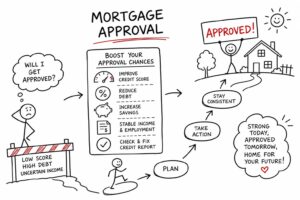
Steps to Qualify with Confidence
-
Gather Your Documents: Collect tax returns, bank statements, and other proof of income.
-
Analyze Your Income: Understand how much you can show as reliable income.
-
Consult an Expert: Speak with a mortgage specialist who understands nontraditional income.
-
Submit Your Application: Make sure your application is complete and accurate.
This method makes qualifying less daunting. By preparing ahead, you feel more in control.
Preparing Your Financial Documents
Preparation is your best friend. Here’s how to get ready:
-
Organize: Keep all documents in a single folder for easy access.
-
Check for Accuracy: Ensure all numbers match across your documents.
-
Update Regularly: Make sure your financial statements are current.
These steps help you avoid delays. The more organized you are, the quicker the process goes.
Mortgage Options for Entrepreneurs

Entrepreneurs have unique options available. Let’s look at two popular choices.
Exploring Bank Statement Loans
Bank statement loans are perfect if your tax returns don’t reflect your true income. Instead of typical income verification, lenders use your bank statements to assess your cash flow. Usually, lenders require 12-24 months of statements. This type of loan is ideal if you have significant deposits.
These loans offer flexibility but may come with higher interest rates. However, they allow you to qualify based on real income rather than taxable income. This option gives you more purchasing power.
Benefits of DSCR Loans for Investors
Debt Service Coverage Ratio (DSCR) loans are great for property investors. They focus on the property’s income potential rather than your personal income. Lenders look at how well the property’s income can cover its debts. This means your personal income is less critical in the approval process.
DSCR loans are ideal if you are investing in rental properties. They allow you to leverage real estate opportunities without the typical income scrutiny. This can be a powerful way to grow your investment portfolio.
Frequently Asked Questions
How do I prove my freelance income for a mortgage?
You can prove freelance income with consistent client contracts or invoices, recent tax returns, and bank statements showing deposits. Lenders need to see stable income over time.
What is a bank statement loan?
A bank statement loan uses your bank deposits instead of tax returns to verify income. It’s ideal if your tax returns don’t accurately reflect your earnings.
What documents are needed for a DSCR loan?
For a DSCR loan, you’ll need the property’s income statements and an appraisal. The lender focuses on the property’s ability to cover its debt, rather than your personal income.
Can I get a mortgage with inconsistent income?
Yes, but it requires thorough documentation. Lenders need to see evidence of potential future income. Consulting with a mortgage expert can help you navigate this.
Why is the Gen First Mortgage Method helpful?
The Gen First Mortgage Method provides a clear, step-by-step path. It helps you gather the right documents and understand your financial picture, making the mortgage process smoother.
Prepare yourself for success by understanding how lenders view nontraditional income. With the Gen First Mortgage Method and the right documents, you’re on the path to securing the best mortgage for your needs.