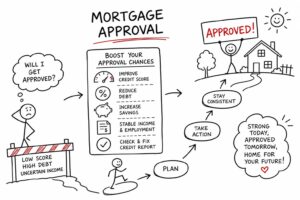

Most buyers start house hunting without a clear mortgage plan and end up over budget or losing offers. You can avoid that trap by setting your home-buying budget before you shop. The Gen First Mortgage Method guides you through your credit score, debt-to-income ratio, down payment options, and closing costs, explained so you walk into every showing with confidence and a winning offer.
Crafting Your Mortgage Plan
Before you start looking at homes, knowing what you can afford is crucial. This step helps you avoid disappointment and stay within your financial limits. Let’s dive into how to craft your mortgage plan.
Understanding Your Home Buying Budget
Your home-buying budget sets the stage for your search. Start by looking at your total income and current expenses. Calculate what you can comfortably spend each month on a mortgage payment. Remember, your budget isn’t just about the price of the home; it also includes taxes, insurance, and other costs. Aim to keep your housing costs below 30 percent of your income to avoid financial strain.
Navigating the Preapproval Checklist
Getting preapproved gives you a clear picture of what you can borrow. It shows sellers you’re serious and ready to buy. To get preapproved, you’ll need to provide proof of income, employment history, and credit details. Make sure to check your credit score beforehand, as it impacts the terms of your loan. A higher score can lead to better rates and terms, saving you money in the long run.
Setting a Realistic Payment Target
A realistic payment target keeps your budget in check. Calculate how much you can pay monthly without stretching your finances. Consider potential changes, like job shifts or family additions, that might affect your budget. Setting a solid target helps you avoid overcommitting and provides peace of mind.
Financial Preparation Essentials

Financial preparation is key to a smooth home-buying process. Understanding costs and exploring assistance can make the journey easier.
Calculating Cash to Close
Cash to close includes your down payment and closing costs. These costs can include appraisal fees, title insurance, and other expenses. Calculate these early to avoid surprises. Having a clear estimate ensures you’re prepared when it’s time to close the deal.
Exploring Down Payment Assistance in Florida
In Florida, various programs can help with down payments. These can ease the financial burden, especially for first-time buyers. Research local and state programs to see if you qualify. Assistance programs can make homeownership more accessible by reducing upfront costs.
Understanding Debt to Income Ratio
Your debt-to-income ratio (DTI) impacts your mortgage approval. It’s the percentage of your income that goes toward debt payments. Lenders use DTI to evaluate your ability to manage monthly payments. Aim for a DTI below 43 percent for better approval chances. Lowering your DTI can improve your mortgage terms.
Strategic Mortgage Planning

Strategic planning ensures your mortgage fits your long-term goals. Consider various factors that can affect your mortgage plan.
Analyzing Credit Score for Mortgage
Your credit score plays a big role in mortgage approval and rates. Higher scores generally lead to better terms. Check your score early and take steps to improve it if needed. This might include paying down debt or correcting errors on your credit report. A strong credit score can save you thousands over the life of your loan.
Exploring Self-Employed Mortgage Options
Self-employed buyers face unique challenges. Lenders may require additional documentation to verify income. Explore loan options designed for self-employed individuals. Programs like bank statement loans can offer more flexibility. Understanding these options helps you find the right fit for your situation.
Interest Rate Strategy and Investment Property Loans
Interest rates affect your monthly payment and total loan cost. Locking in a low rate can save money over time. If you’re considering investment properties, look into specific loan options. These loans may have different requirements and benefits. A strategic approach to rates and loans can enhance your financial position.
By following these steps and utilizing this information, you can build a solid mortgage plan that aligns with your goals and helps you secure the home of your dreams.